


An Overview of the Healing Response Technique for Rotator Cuff Tears
The rotator cuff healing response technique is a procedure that uses the body’s own stem cells and bone marrow to help repair damaged rotator cuff tendons.
It was initially introduced into the medical field to help patients who heal slower and take longer to recover from such acute rotator cuff injuries. The best way to accelerate healing and reduce risk of re-injury is to use the bodies own natural healing system.
The rotator cuff healing response technique uses tiny “microfracture” holes in the bone; the blood clot from the bone that releases blood captures the end of the injured muscle and eventually reattaches the ligament back to the bone. No sutures are needed with this repair technique so patients have rapid recoveries following acute rotator cuff tears.
The procedure eliminates pain and results in dramatic improvements in shoulder function. In addition, the healing response technique has many advantages including a much shorter recovery period and less cost, and because it is less invasive, the chances for osteoarthritis to set in later are greatly reduced.
To learn more about acute rotator cuff tears, or to determine if you are a candidate for the healing response technique, please contact the orthopedic office of Dr. Peter Millett.
Healing Response Technique Images
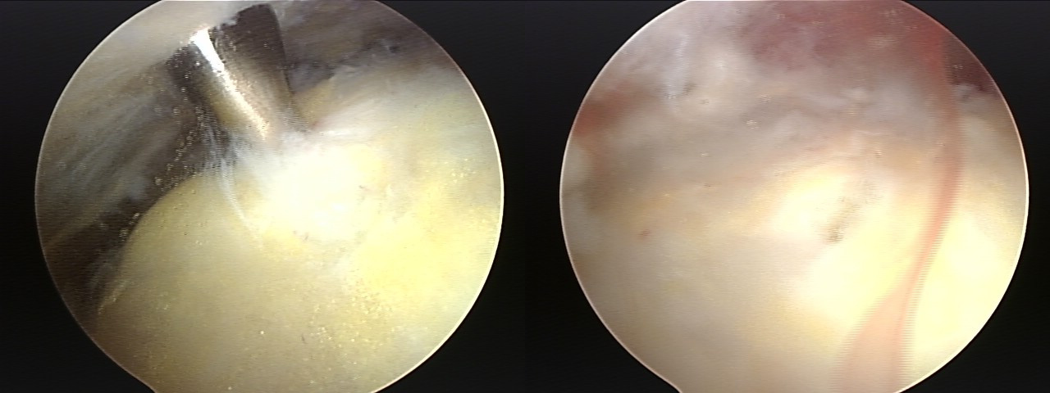
(Click to Enlarge) Rotator Cuff Healing Response Technique

