


An Overview of Tendon Transfers for Irreparable Rotator Cuff Tears
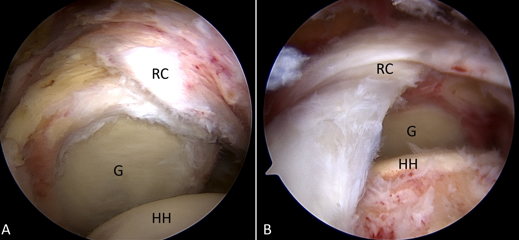
Tendon transfers are reconstructive shoulder procedures that are used as salvage procedures for the treatment of chronic irreparable rotator cuff tears (Figure 1) .
There are a variety of types of tendons transfers. Usually tendon transfers are salvage procedures which help decrease pain and improve function. Dr. Peter Millett specializes in this form of shoulder surgery and is available to discuss the treatment.
Rotator Cuff Tears
A rotator cuff tear may become irreparable for a number of reasons. In some cases, a delay in treatment may result in a rotator cuff tear that is irreparable. In other cases, an irreparable tear may result after a prior surgery where the tendon fails to heal or there is a new injury which further damages the tendon to a state that is beyond repair.
A massive rotator cuff tear is characterized as a tear that includes at least two of the four rotator cuff muscle-tendon units. While many massive rotator cuff tears can be repaired, some tears are irreparable and the tendons can no longer be attached to the original attachment sites on the humerus.
What is a Tendon Transfer?
During a tendon transfer, a working tendon and its muscle are moved from one location to another to substitute or replace the damaged or deficient muscle tendon unit. This procedure is completed so that lost function of the shoulder can be regained.
Tendon transfer surgery for an irreparable rotator cuff tear can only be performed on patients who meet the following criteria:
- The patient must be physically healthy and active with functional loss of strength related to muscle loss.
- The shoulder joint must be relatively healthy and flexible without signs of osteoarthritis or other evidence of degeneration.
- The patient must have healthy, strong bones.
- The muscles and tendons to be transferred must be healthy with normal bulk and function.
- Patients must understand that there is a prolonged rehabilitation period for a tendon transfer. Since this is typically a salvage procedure, the recovery is slower. Moreover since the transferred muscle-tendon unit needs to learn a new function, a strict rehab program will need to be administered and followed carefully.
Tendon Transfers for Rotator Cuff Tears
Latissimus Dorsi Tendon Transfer
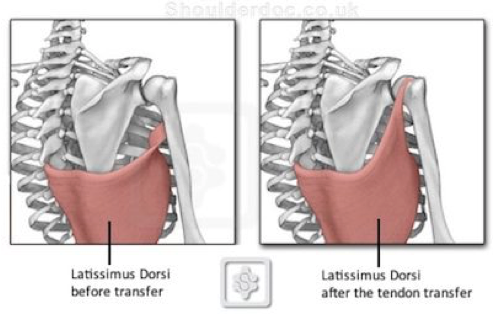
A transfer of the latissimus dorsi tendon (Figure 2) is utilized in cases of posterosuperior irreparable rotator cuff tears involving the supraspinatus and infraspinatus tendons. The functioning latissimus dorsi tendon takes on the roles of the irreparable infraspinatus and supraspinatus tendons.
Lattissimus Dorsi Tendon Transfer Video
Pectoralis Major Tendon Transfer
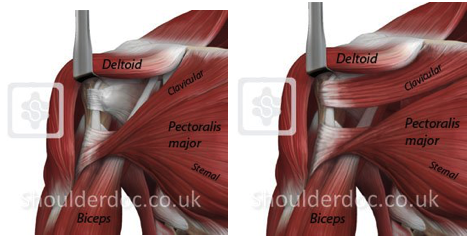
A transfer of the pectoralis major tendon (Figure 3) is utilized in cases of anterosuperior irreparable rotator cuff tears involving primarily the subscapularis and supraspinatus tendons. The functioning pectoralis major muscle tendon takes on the roles of the irreparable supraspinatus and subscapularis tendons.
Combined Pectoralis Major and Teres Major Tendon Transfer
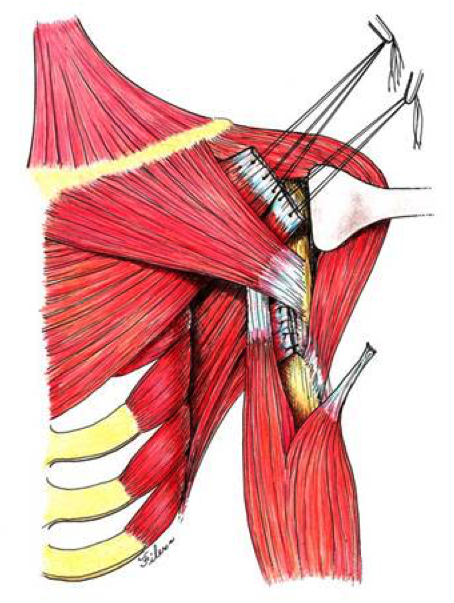
In certain cases of irreparable anterosuperior rotator cuff tear, a combined transfer of the pectoralis major tendon and teres major tendon may be performed (Figure 4). The goal of this procedure is to better approximate the function of the subscapularis muscle.
Trapezius Tendon Transfer
In certain patients with irreparable posterosuperior rotator cuff tear, the lower trapezius tendon transfer may provide a more direct line of pull that improves external rotation. Compared to latissimus dorsi tendon transfers, this may do a better job of reproducing the roles of the supraspinatus and infraspinatus tendons. Though it is not an extremely common procedure, the lower trapezius tendon transfer may be a viable alternative option for patients with irreparable posterosuperior rotator cuff tears.
For additional information on tendon transfers for a failed rotator cuff repair or a winged scapula, please contact the office of Dr. Peter Millett.


