


On This Page
Understanding Shoulder Nerve Compression
Not all shoulder pain is caused by a rotator cuff tear or arthritis. In some cases, the problem is actually a pinched nerve in the shoulder. The symptoms can closely resemble other shoulder injuries, however, nerve compression disorders are sometimes overlooked or diagnosed later than they should be.
Unlike other shoulder injuries, nerve compression may begin only as painless weakness. Patients may notice difficulty lifting or more commonly loss of strength while externally rotating the arm, difficulty with overhead activities, or muscle wasting around the shoulder. All of this can occur before any significant discomfort develops. As the condition progresses, pain, numbness, or tingling may also occur.
Diagnosing these conditions can be challenging because not every MRI identifies a compressed nerve. While imaging studies are helpful, nerve compression is often diagnosed through a combination of a detailed clinical history and physical examination, advanced imaging, and nerve conduction studies (electromyography – EMG). It is always important to understand the patient’s specific symptoms, their onset, and the patient’s activity level.
Athletes who perform repetitive overhead motions, such as volleyball players, baseball pitchers, tennis players, and swimmers, are at higher risk for nerve compression of the shoulder, most commonly the suprascapular nerve. Nerve irritation can be caused by repetitive motion, pulling on the nerves in the shoulder, scar tissue, tight ligaments which compress the nerve, or prior shoulder injuries.
Because shoulder nerve disorders can mimic other shoulder conditions such as rotator cuff tears, labral injuries, or impingement syndrome, an accurate diagnosis is essential. Surgeons much be skilled at identifying this uncommon but significant source of weakness or pain. This allows his patients to receive the most appropriate treatment which may include arthroscopic nerve decompression to prevent permanent muscle weakness or atrophy.
Case Example: Volley ball player with nerve impingement
Recently a young elite beach volleyball player developed profound weakness of her dominant serving shoulder. Interestingly, there was no pain. After months of searching for answers, she was ultimately diagnosed with suprascapular nerve compression and underwent arthroscopic nerve release with Dr. Peter J. Millett. Today she has returned to high-level volleyball. You can read her amazing story of recovery here. Suprascapular Nerve Entrapment Patient Story
How is a Pinched Nerve in the Shoulder Diagnosed?
Dr. Millett diagnoses shoulder nerve compression by beginning with a thorough medical evaluation. To reach an accurate diagnosis, he may obtain one or more of the following:
- Medical History: Dr. Millett will discuss when the symptoms began, what activities make them worse, whether you’ve experienced trauma or repetitive overhead motion, and how your symptoms have changed over time.
- Physical Examination: A detailed shoulder exam evaluates strength, range of motion, muscle function, sensation, and areas of tenderness. He looks for atrophy in specific areas and muscles that correlate with various types of nerve damage or injury. Certain physical exam findings can help identify which nerve may be affected.
- Evaluation for Muscle Atrophy: Visible loss of muscle tone, particularly in the supraspinatus or infraspinatus muscles, may indicate that a nerve has been compressed for an extended period.
- Strength Testing: Weakness is often one of the earliest signs of shoulder nerve compression. Careful testing of specific muscle groups can help distinguish a nerve injury from a tendon injury, such as a rotator cuff tear.
- Xrays and MRI (Magnetic Resonance Imaging): X-rays are helpful to evaluate the bones and MRI’s help evaluate the soft tissues such as muscles, tendons, labrum, and surrounding areas where the nerve can get entrapped. An MRI may also identify cysts, scar tissue, or other structures that can be compressing a nerve. However, not every pinched nerve is directly visible on an MRI. There may be indirect signs such as muscle edema or atrophy.
- EMG and Nerve Conduction Studies: Electromyography (EMG) and nerve conduction studies measure how well the nerves and muscles are functioning. These tests can help confirm nerve compression, determine which nerve is involved and where it is compressed, and, at the same time, assess the severity of the injury.
- Ultrasound: In some cases, ultrasound provides a dynamic view of the shoulder and can identify cysts, nerve enlargement, or other abnormalities. This test can be done in an awake patient and while the shoulder is moving.
Early diagnosis can improve the likelihood of nerve recovery. If you have persistent shoulder weakness, muscle atrophy, or unexplained pain, you need to be evaluated by a shoulder specialist like Dr. Millett who is familiar with these uncommon conditions and has a track record of treating them successfully. He treats patients in Vail, Aspen and the surrounding Denver, Colorado communities, as well as throughout the World.
Advanced Arthroscopic Nerve Decompression Procedures
There are different nerves around and in the shoulder that can become compressed. Remember, this doesn’t always result in pain. However, pain, weakness and muscle atrophy can present later along with loss of function. Below we will explain the three most common nerve entrapment disorders.
Suprascapular Nerve Entrapment and Surgical Release
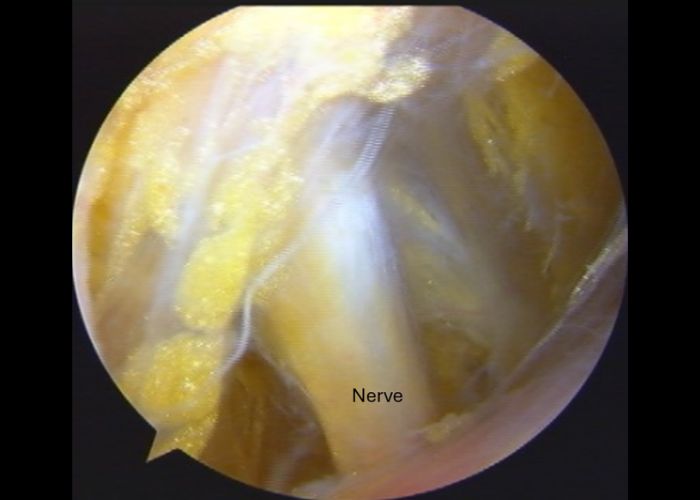
The suprascapular nerve travels from the neck, through a narrow passage in the shoulder blade called the suprascapular notch, and then around the back of the shoulder blade to under a ligament and though the spinoglenoid notch. Along this path, the nerve supports and supplies the muscles with power that help lift and rotate the arm (the supraspinatus and infraspinatus). When this nerve becomes compressed (often by repetitive stretching, a thickened ligament, scar tissue, or a cyst related to a labral tear) patients can experience deep, aching shoulder pain along with weakness lifting or rotating the arm. Over time, this can lead to visible atrophy (wasting) of the rotator cuff muscles. In more severe cases that fail to improve, a suprascapular nerve release is recommended. Dr. Millett prefers to perform this arthroscopically, through small incisions, to relieve pressure on the nerve as he can better see and protect the nerve during the surgery. The minimally-invasive approach is also quite helpful for athletes at it causes less pain, less damage to the surrounding tissues, and facilitates a faster recovery. Most patients notice improvement in pain and strength, though recovery depends on how long the nerve was compressed prior to treatment.
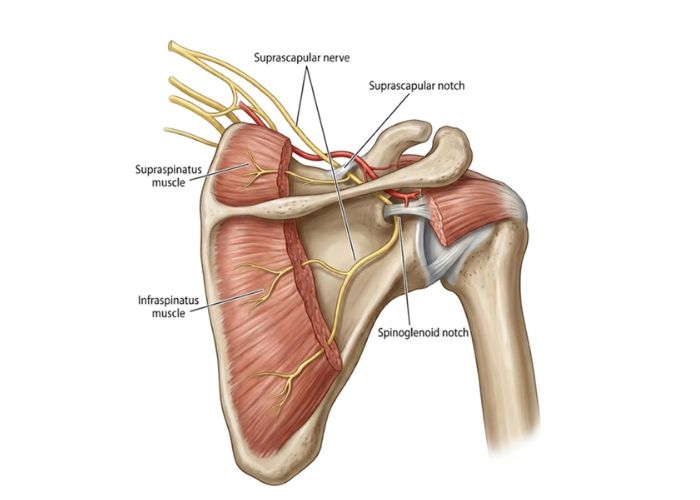
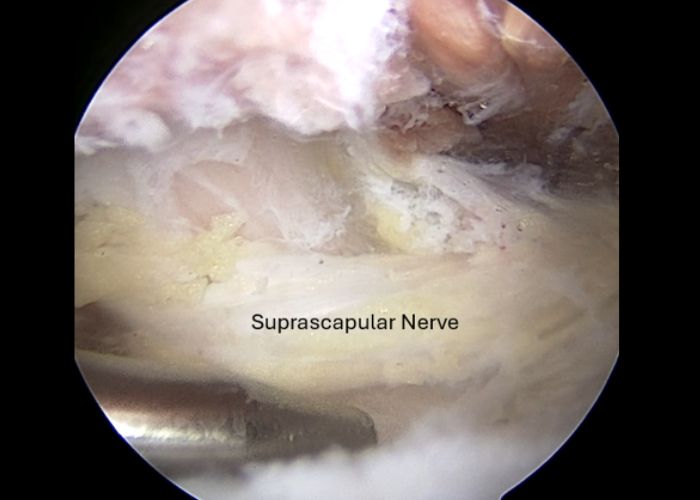
Dr. Millett has published peer-reviewed research describing arthroscopic techniques for treating suprascapular nerve entrapment and has extensive experience caring for athletes with this uncommon condition.
In fact, you can read our patient success story here: Elyse’s Story of Shoulder Nerve Entrapment
Read Dr. Millett’s published research here:
Axillary Nerve Entrapment (Quadrilateral Space Syndrome) and Release
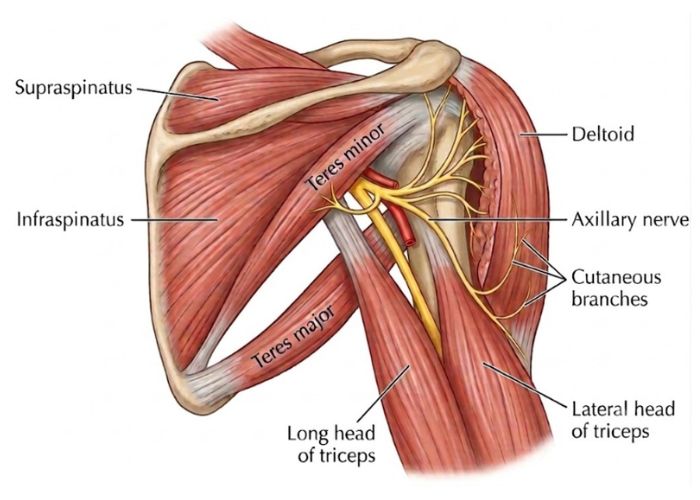
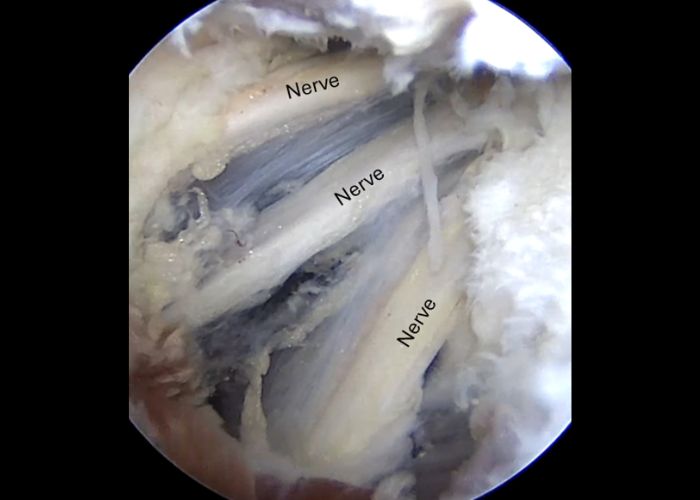
The axillary nerve branches off the brachial plexus and travels through a small passage in the armpit called the quadrilateral space, powering the teres minor rotator cuff muscle and the deltoid muscle and supplying sensation to the outer lateral aspect of the shoulder. This nerve can become compressed within this space due to fibrous bands, scar tissue, cysts, or repetitive overhead motion. A condition called quadrilateral space syndrome results when the nerve is entrapped in the back to the shoulder as it goes to innervate the deltoid. Symptoms include shoulder pain, numbness over the outer shoulder, and weakness with overhead activity. An axillary nerve release involves surgically decompressing the nerve by removing the fibrous bands or scar tissue restricting it along its course and within the quadrilateral space, allowing the nerve to move and function normally again.
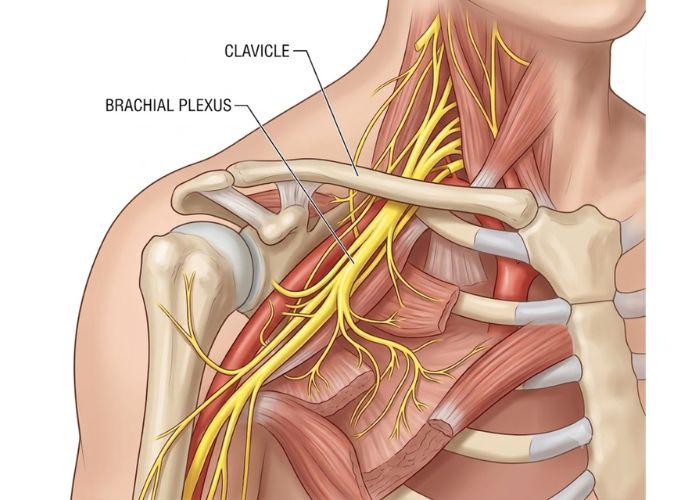
Brachial Plexus Entrapment and Neurolysis
The brachial plexus is a network of nerves originating from the neck that branch out to control movement and sensation throughout the arm, forearm and hand. Compression of these nerves can result from scar tissue following trauma, stretch injuries, prior shoulder or neck surgery, or from anatomic structures that narrow the space through which the nerves travel. This results in nerve compression that can cause persistent pain, numbness, tingling, or weakness in the arm. Neurolysis is a surgical technique that carefully frees the affected nerves from the surrounding scar tissue, restoring their ability to move and function properly. This procedure is often considered when nonsurgical treatment has failed to relieve symptoms, and outcomes depend on the severity and duration of the original nerve injury.
Why Early Diagnosis for Compressed Nerve in the Shoulder Matters
Early diagnosis is one of the keys to success when treating shoulder nerve compression. If a nerve in the shoulder is pinched, or compressed for an extended period of time, it may not be able to transmit signals normally to the muscles it controls. Over time, this can lead to muscle weakness, muscle atrophy, and a loss of shoulder function. In extreme cases, prolonged nerve entrapment or compression can result in permanent nerve and muscle damage. This may make full recovery more difficult or prolonged and in some severe cases may preclude full recovery altogether, even after the entrapment is relieved. If you experience unexplained shoulder weakness, muscle wasting, or shoulder pain, it is important to seek evaluation and treatment from an experienced shoulder specialist.
Why Choose Dr. Peter Millett for Shoulder Nerve Compression?
Unlike more common shoulder conditions, nerve compression disorders require advanced knowledge of shoulder neuroanatomy and experience with arthroscopic nerve surgery. Dr. Peter Millett is internationally recognized for treating complex shoulder conditions and has written and co-written numerous peer-reviewed research articles describing arthroscopic techniques for peripheral nerve decompression around the shoulder. He has been treating these types of injuries for almost three decades with high levels of success. Patients travel from around the country and globe to seek his expertise for conditions including suprascapular nerve entrapment, quadrilateral space syndrome, and brachial plexus injuries.
Shoulder Weakness vs Pinched Nerve?
Shoulder pain that continues and is accompanied by weakness, muscle atrophy, or loss of function may be caused by a compressed nerve rather than a tendon injury. Dr. Peter Millett specializes in diagnosing and treating complex shoulder nerve conditions using advanced arthroscopic techniques. Schedule a consultation to determine the cause of your symptoms and explore the treatment options that are right for you.
Some shoulder surgeons can say, “I perform this surgery.” Dr. Millett can say:
“I have successfully performed this surgery on hundreds of patients and I have published peer-reviewed research on it.”
Frequently Asked Questions About Shoulder Nerve Compression
What does suprascapular nerve pain feel like?
Suprascapular nerve entrapment can cause a deep, aching pain in the back or top of the shoulder. However, many patients may not have any pain and instead may complain only of muscle weakness, especially when lifting or rotating the arm or performing overhead activities. As shoulder nerve entrapment continues, muscle atrophy and loss of strength may become more noticeable.
Can a pinched shoulder nerve heal without surgery?
Yes! There are some cases of shoulder nerve compression that improve with rest, activity modification, physical therapy, medications, or injections. However, if symptoms persist, weakness worsens, or muscle atrophy develops, surgery may be recommended to relieve the pressure on the nerve and to prevent further damage.
What causes suprascapular nerve entrapment?
Suprascapular nerve entrapment occurs when the nerve becomes pinched or compressed as it passes around and through the shoulder blade. There are a number o flocations where the nerve may become entrapped or compressed. Common causes include repetitive stretch injuries, thickened ligaments, scar tissue, paralabral cysts associated with labral tears. Overhead athletes are at a particular risk because of the repetitive overhead movements. The overhead athletes at the highest risk for this type of shoulder nerve entrapment include those who play or participate in volleyball, baseball, tennis, or swimming.
What is quadrilateral space syndrome?
Quadrilateral space syndrome is a rare condition in which the axillary nerve becomes pinched or compressed as it travels through the quadrilateral space, a passageway btween four tight structures, in the back of the shoulder, hence the name “quadrilateral space” which is a four-sided passageway in the upper back, located just below the shoulder joint. This condition or “syndrome” can cause shoulder pain, numbness over the outside of the shoulder, weakness of the deltoid muscle particularly with overhead activities, and difficulty performing sports that require repetitive arm motion.
When is shoulder nerve release surgery recommended?
Surgery may be recommended when:
- Nonsurgical treatment fails to relieve symptoms
- There is significant weakness or muscle atrophy
- When testing confirms ongoing nerve compression
The goal of shoulder nerve decompression surgery is to relieve pressure on the nerve, restore function, and prevent permanent nerve damage whenever possible.
Can muscle atrophy from nerve compression improve?
Yes! Muscle strength and size can improve after successful nerve decompression, especially when the condition is diagnosed and treated early. However, prolonged nerve compression may lead to permanent muscle loss and damage, which is why early evaluation and treatment are so important for preserving shoulder function.
How long does nerve recovery take after surgery?
Nerve healing is gradual and varies from person to person. The complete recovery depends on different factors. These healing times can vary depending on the type of nerve involved, where it is compressed, how long it was compressed before surgery, and the severity of the injury. While many patients notice improvement over time, nerves typically recover more slowly than muscles or tendons, and full recovery may take several months. Nerves regenerate about 1 mm per day. Fortunately, most of the nerve injuries of the shoulder are relatively close to the spinal cord, and they are not as long as say the nerves to your fingers, so recovery occurs somewhat more quickly.

