A Rare Shoulder Injury Threatened a Rising Volleyball Career
For most overhead athletes, shoulder injuries come with an acute injury or early warning signs like pain, popping or feelings of instability. For Elyse, there was none, no warning that her shoulder had a serious problem.
At just 15 years old, the North Carolina native was living her dream. Elyse had earned a spot in USA Volleyball’s National Development Program and was preparing for an exciting future in beach volleyball!
In December 2025, while Elyse was training with the USA Volleyball National Development Program, her longtime strength and conditioning coach Theo, in Cary, North Carolina, noticed something that concerned him. Theo had worked with Elyse for years and knew Elyse well. During one of her workouts, Theo observed that her dominant arm was noticeably weaker. Concerned by this, he suggested that the weakness might actually be coming from a nerve problem, not just muscle fatigue, and he urged that Elyse be evaluated as soon as possible.

“She wasn’t complaining of pain,” her mom Angela recalls. “She was still performing well, so it would have been easy to overlook. Looking back, Angela believes the ultimate outcome depended on a series of people who stepped in at exactly the right time. From Theo recognizing that something wasn’t right, to finding Dr. Millett’s research online, to ultimately placing Elyse’s care in the hands of a surgeon who had experience treating this rare condition, everything came together.
Searching for Answers about Shoulder Weakness
Determined to find the cause, Angela immediately began looking for answers. Over the next several weeks, Elyse underwent multiple tests, including imaging studies, an MRI, and nerve conduction studies. While the tests confirmed severe muscle atrophy in the back of her shoulder, no one could explain why it was happening, or even how to treat it.
One orthopedic surgeon referred her elsewhere. Other specialists recommended rest or possibly steroid injections.
“They all knew something was wrong,” Angela says. “But no one knew how to fix it.”
Further testing revealed the problem: Elyse had suprascapular nerve entrapment, a rare condition in which the nerve supplying part of the rotator cuff becomes compressed near the spinoglenoid notch. (A bony process in the back of the shoulder) The compression had already caused nearly 40 percent atrophy of her infraspinatus muscle, dramatically weakening her shoulder.
Without treatment, her volleyball career, and possibly the health of the nerve itself, was at risk.
Finding the Right Shoulder Specialist for Suprascapular Nerve Entrapment
Like many parents facing a rare diagnosis, Angela turned to the internet. She searched every medical term she had been given until one publication stood out. The paper was titled Arthroscopic Suprascapular Nerve Neurolysis With Spinoglenoid Ligament Release for Distal Suprascapular Nerve Entrapment One of the authors was Dr. Peter Millett, Orthopedic Shoulder Specialist in Vail Colorado.
“It described exactly what Elyse was experiencing,” Angela says. “For the first time, I felt like someone actually understood this condition.” She reached out directly to Dr. Millett and his response gave them immediate hope. Not only had he seen this rare condition before, but he also knew exactly how to treat it.
Before making the trip to Vail, Angela did one more thing: She called a trusted friend whose husband is one of the top agents for NFL players and asked if he knew Dr. Millett. “The answer was immediate,” she recalls. “‘He’s the best shoulder surgeon in the country. Go see him.'” Within days, they were on a plane to Colorado.
A Complex Arthroscopic Shoulder Surgery for Nerve Entrapment
After evaluating Elyse and obtaining additional imaging, Dr. Millett confirmed the diagnosis. Her suprascapular nerve was being compressed beneath the spinoglenoid ligament. This is a very rare type of shoulder condition and is most commonly seen in overhead athletes such as volleyball players.
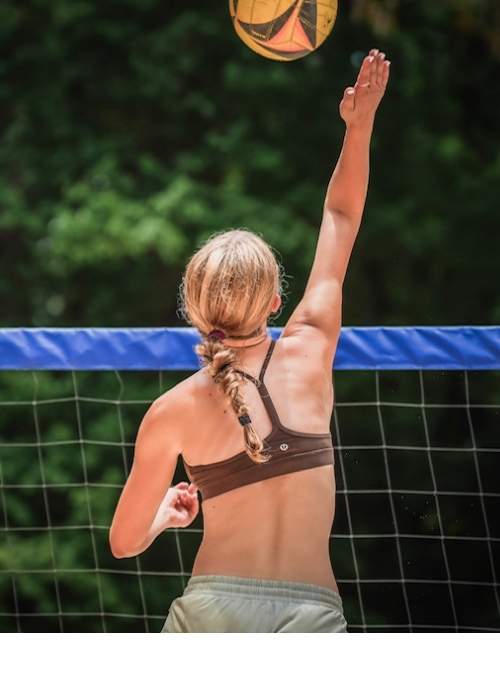
The repetitive overhead motion had compressed the nerve, causing severe weakness, loss of external rotation strength, and significant atrophy of one of the key muscles of the rotator cuff. The following morning, Dr. Millett performed an arthroscopic suprascapular nerve neurolysis, releasing the compressed nerve by carefully dividing the tight spinoglenoid ligament alleviating the compression on the nerve.
Dr. Millett Explains Suprascapular Nerve Entrapment:
“Elyse had suprascapular nerve neuropathy affecting the infraspinatus muscle of her rotator cuff,” explains Dr. Millett. “This uncommon diagnosis caused profound weakness and muscle atrophy that prevented her from playing volleyball.”
“Arthroscopic neurolysis of the suprascapular nerve is technically demanding. It requires advanced arthroscopic experience and an in-depth understanding of the shoulder’s neuroanatomy. Fortunately, once the nerve was released, it had the opportunity to recover.”
Recovery After Surgery for Suprascapular Nerve Entrapment
Just when Elyse and her family thought she was over the worst of her injury, it turned out that the surgery was only the beginning. Nerves heal slowly, and no one could predict how much strength Elyse would regain.
Later however, Elyse faced an unexpected challenge during her rehabilitation when she developed pneumonia, an illness unrelated to her shoulder surgery. The setback temporarily slowed her recovery and resulted in significant weight loss, requiring her rehabilitation plan to be adjusted. “It was another setback,” Angela says. “But Elyse never stopped working.”
Angela was grateful that throughout Elyse’s recovery, Dr. Millett remained closely involved, working with her physical therapist in North Carolina to tailor Elyse’s rehabilitation as her strength returned. He helped keep her recovery on track despite the unexpected illness with regular communication and thoughtful adjustments to her therapy program.
Little by little, the nerve began to wake up. By March, they could actually see muscle activity returning.
By April, visible muscle definition had returned to the back of her shoulder. She gradually progressed from passing drills to sport-specific training before finally returning to full volleyball activities.
Back to Competitive Volleyball After Shoulder Surgery
Four months after surgery, Elyse received the news she had been waiting for. She was cleared to return to volleyball without restrictions! Only days later, her coach sent an excited message to her parents:
“He said she was stronger than he’d ever seen her.” For Angela, it was the moment everything became real. “It was such a relief,” she says. “After everything we’d been through, seeing her play again, and with more strength, was incredible.”
Despite missing spring training because of surgery and pneumonia, Elyse returned in time for summer competition, college camps, and recruiting showcases. She earned acceptance to Florida State University and continues competing as part of USA Volleyball’s Under-17 National Development Program.
Looking back, Angela believes finding the right diagnosis, and the right surgeon, made all the difference.
“When you’re told no one knows how to help your child, it’s terrifying,” she says. “Dr. Millett not only understood what was wrong, but he gave Elyse the opportunity to get back to the sport she loves. We’re incredibly grateful.”
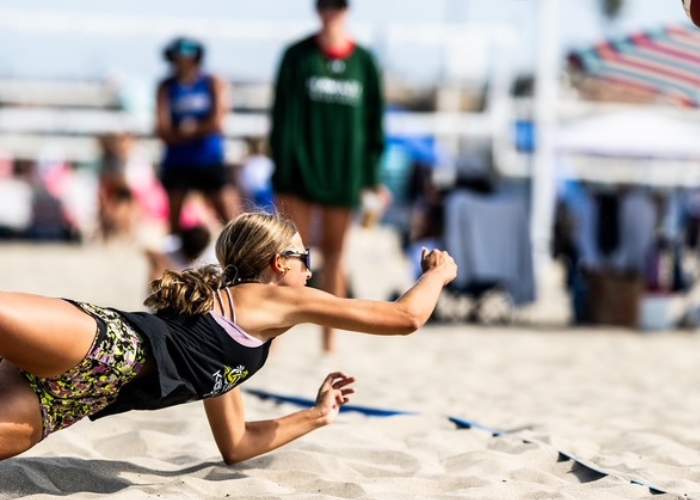
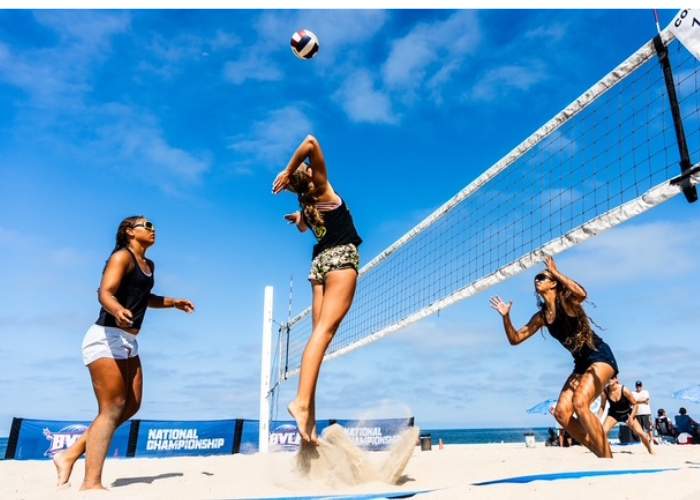
Today, Elyse is back on the sand, stronger than ever, doing exactly what every young athlete hopes to do: returning to the sport that they love.
Special thanks to Elyse and her Mother, Angela and to their family for sharing their patient story.
You can read the Study about Shoulder Nerve Entrapment that Angela found online here: